
Loading...
Serving Urbana, IL and surrounding areas. (217) 207-0899
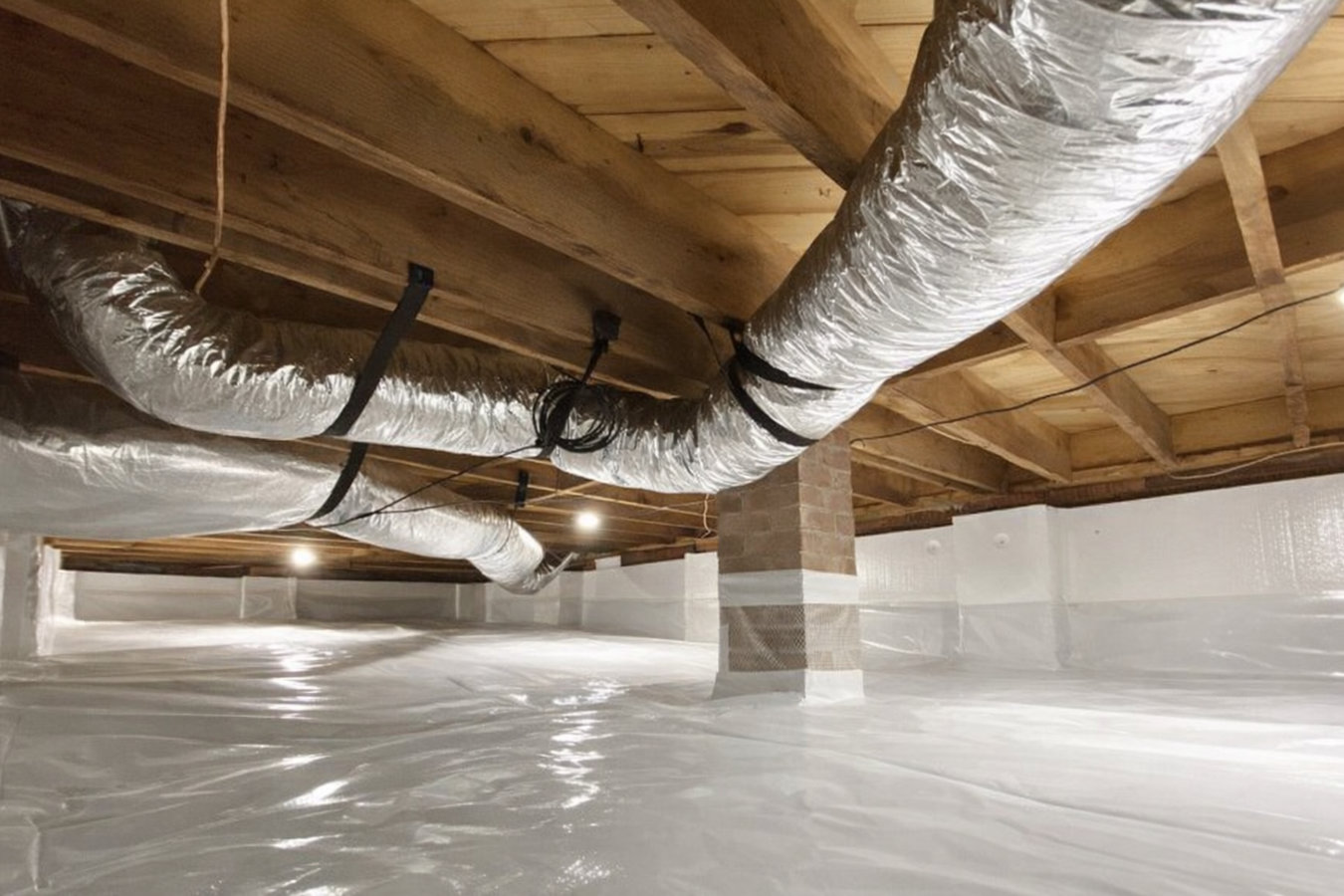
Ground moisture moves up through unprotected crawl spaces every day, soaking insulation and rotting framing. A properly installed vapor barrier blocks it before it reaches your home.
Vapor barrier installation in Urbana, IL involves laying heavy plastic sheeting across the bare dirt or concrete floor of your crawl space - or against basement walls - to block ground moisture from rising into the structure above it, and most residential jobs are completed in a single day with no disruption to your living area.
Think of it as a raincoat for the underside of your house. Without a barrier, soil moisture rises constantly - even when it has not rained in weeks - soaking into floor joists, saturating insulation, and eventually turning into musty smells and cold floors that do not respond to your thermostat. In Urbana, where clay-heavy glacial soils hold water close to the surface for extended periods after rain or snowmelt, this process happens faster than in areas with sandier soil. Combining a vapor barrier with good crawl space vapor barrier practices gives you the most complete protection for your crawl space.
The quality of installation is what determines how long the barrier actually works. A good job uses thick, durable sheeting - not the thin plastic from a hardware store - with fully overlapped, taped seams and material that runs up the foundation walls. Gaps, loose edges, and untaped seams are where moisture finds its way back in, usually within a year or two of a cheap installation.
If your home develops a damp, earthy smell every spring - particularly near the floors or in rooms above the crawl space - that is often ground moisture rising through an unprotected crawl space. In Urbana, spring snowmelt and April rains saturate the clay soil quickly, and homes without a vapor barrier tend to show this symptom most strongly between March and June. The smell is a sign that moisture is actively moving through your home's structure.
Floors that are noticeably colder than the rest of your home in winter, or that have any give when you walk on them, can mean the wood underneath has been absorbing moisture over time. Urbana's cold winters make moisture-damaged wood lose its stiffness, and you feel it underfoot before any visible damage appears. Both symptoms tend to get worse each year until the moisture source is addressed.
If you have ever looked into your crawl space and seen water droplets on pipes, metal ducts, or the underside of the floor joists, moisture levels are already high enough to cause damage. This condensation forms when warm, humid air meets cooler surfaces - a common pattern in Urbana's humid summers. Left unchecked, it leads to rust on metal components and rot on wood framing.
Older homes in Urbana's established neighborhoods near downtown and the University of Illinois campus were typically built without any moisture barrier under the crawl space. If you have owned your home for years and no one has mentioned the crawl space, there is a reasonable chance it has bare dirt with no protection. This is not an emergency, but it is a gap worth closing before it causes structural damage.
Most vapor barrier installations start in the crawl space, where we lay heavy-duty sheeting across the entire ground surface, overlap every seam by at least a foot and tape them securely, and run the material up the foundation walls so there is no exposed soil anywhere in the space. Pipes, posts, and columns that pass through the barrier are wrapped and sealed individually. For homes where the basement walls or floor are also allowing moisture through - a common issue with older concrete block foundations in Urbana - we can extend the installation to cover those surfaces as well.
If the project reveals that the crawl space also needs thermal protection, we can combine the vapor barrier with a full crawl space vapor barrier installation and insulation in a single job. Homes that need broader air sealing work - for example, where conditioned air is escaping through gaps around the crawl space perimeter - can also benefit from pairing this work with our attic air sealing service for a more complete whole-home approach. We will assess your specific situation and recommend only what your home actually needs.
The most common installation - heavy sheeting across the entire ground surface with sealed seams and wall coverage, suited for homes with bare dirt crawl spaces.
For homes where an existing barrier has torn, crumbled, or deteriorated - removing the old material and installing a properly rated replacement.
For homes where moisture is penetrating through basement walls or concrete floors, often combined with crawl space work for complete below-grade protection.
Pairs the moisture barrier with vent sealing and insulation for the most complete crawl space treatment - suited for homes with recurring or severe moisture problems.
The Champaign-Urbana area sits on flat glacial terrain with clay-rich soils that drain slowly. After heavy rain or spring snowmelt, water has nowhere to go quickly, so it sits near the surface and pushes moisture upward into crawl spaces and basements. Urbana also sees about 40 inches of precipitation per year spread across wet winters and humid summers - meaning crawl spaces face moisture pressure from two directions: saturated ground in spring and condensation from warm, humid air in summer. Homeowners in Rantoul and across Champaign County deal with the same flat terrain and clay soil, and benefit from the same approach. The U.S. Environmental Protection Agency identifies moisture control as one of the most important steps homeowners can take to prevent mold and protect indoor air quality.
A large share of Urbana's residential neighborhoods - including areas near the University of Illinois campus and the older sections of east Urbana - contain homes built before the 1960s, when crawl space moisture protection was rarely included in construction. These homes often have bare dirt crawl spaces with no barrier at all, or deteriorated original plastic that has crumbled over the decades. Homes that spent years as rental properties are especially likely to have deferred maintenance in this area - tenants rarely inspect crawl spaces and landlords often do not prioritize invisible repairs. Homeowners in Mahomet with similar vintage housing stock face the same pattern, and a vapor barrier is one of the most straightforward ways to close that gap.
When you reach out, we ask a few basic questions about your home - crawl space or basement, any symptoms you have noticed, whether you know if a barrier exists. We reply within one business day and can schedule an on-site visit within a few days. The estimate is free and comes with no obligation.
We access your crawl space and spend 15 to 30 minutes checking the ground condition, any existing barrier, moisture or drainage issues, and the overall size. We explain what we find in plain language and give you a written estimate that specifies the material thickness, how seams will be handled, and the total scope. No surprises on the bill.
The crew lays heavy-duty sheeting across the entire crawl space floor, overlaps and tapes every seam, runs the material up the foundation walls, and seals around pipes and posts. The work happens entirely below your living area. A typical Urbana crawl space takes four to eight hours - you can go about your day upstairs.
When the job is done, we walk you through what was installed and show you photos of the finished work - seams, wall coverage, and any penetrations we sealed. There is no curing period; the barrier works immediately. We explain what to watch for going forward and answer any questions before we leave.
Free estimate, no obligation - we assess your crawl space, explain what we find, and give you a written quote you can rely on.
(217) 207-0899We install barriers rated for long-term durability - thicker material that holds up under foot traffic, resists punctures, and does not become brittle after a few seasons. The thin plastic sold at hardware stores degrades quickly under the moisture pressure that Urbana's clay soil creates, and a failed barrier means the same problem returns within a year or two.
Most of our crawl space work happens in pre-1970 homes in Urbana's established neighborhoods, including properties near the University of Illinois campus that spent years as rentals with little maintenance. We know what we are walking into on those jobs - bare dirt, old crumbled plastic, or decades of accumulated debris - and we document it all before quoting the work.
A vapor barrier is invisible the moment the access hatch closes, which makes it easy for contractors to cut corners. We photograph the completed installation - seams, wall coverage, and penetrations - and walk you through what was done before we leave. You have a record of the work, not just a receipt.
Urbana's Building Safety Division has local requirements that differ from general Illinois rules. We know which vapor barrier projects require a permit in Urbana - particularly those involving vent sealing or encapsulation - and handle the paperwork when needed. The{' '}Building Performance Institute (BPI) sets the building science standards we follow for moisture management on every project.
Taken together, these details mean you get a barrier that actually lasts through Urbana winters and humid summers - installed by a contractor who will show you the work rather than just tell you it was done right. Call us or submit an estimate request and we will give you a straight answer about what your home needs.
Sealing gaps and bypasses in the attic floor to stop conditioned air from escaping - complements crawl space moisture work for a complete home envelope.
Learn MoreDedicated crawl space moisture barrier installation - same high-grade sheeting and sealed-seam approach applied specifically to crawl space floor and walls.
Learn MoreOnce snowmelt saturates the clay soil, every week without a vapor barrier means more moisture moving through your home's structure. Call us today to get your free estimate scheduled.