
Loading...
Serving Urbana, IL and surrounding areas. (217) 207-0899
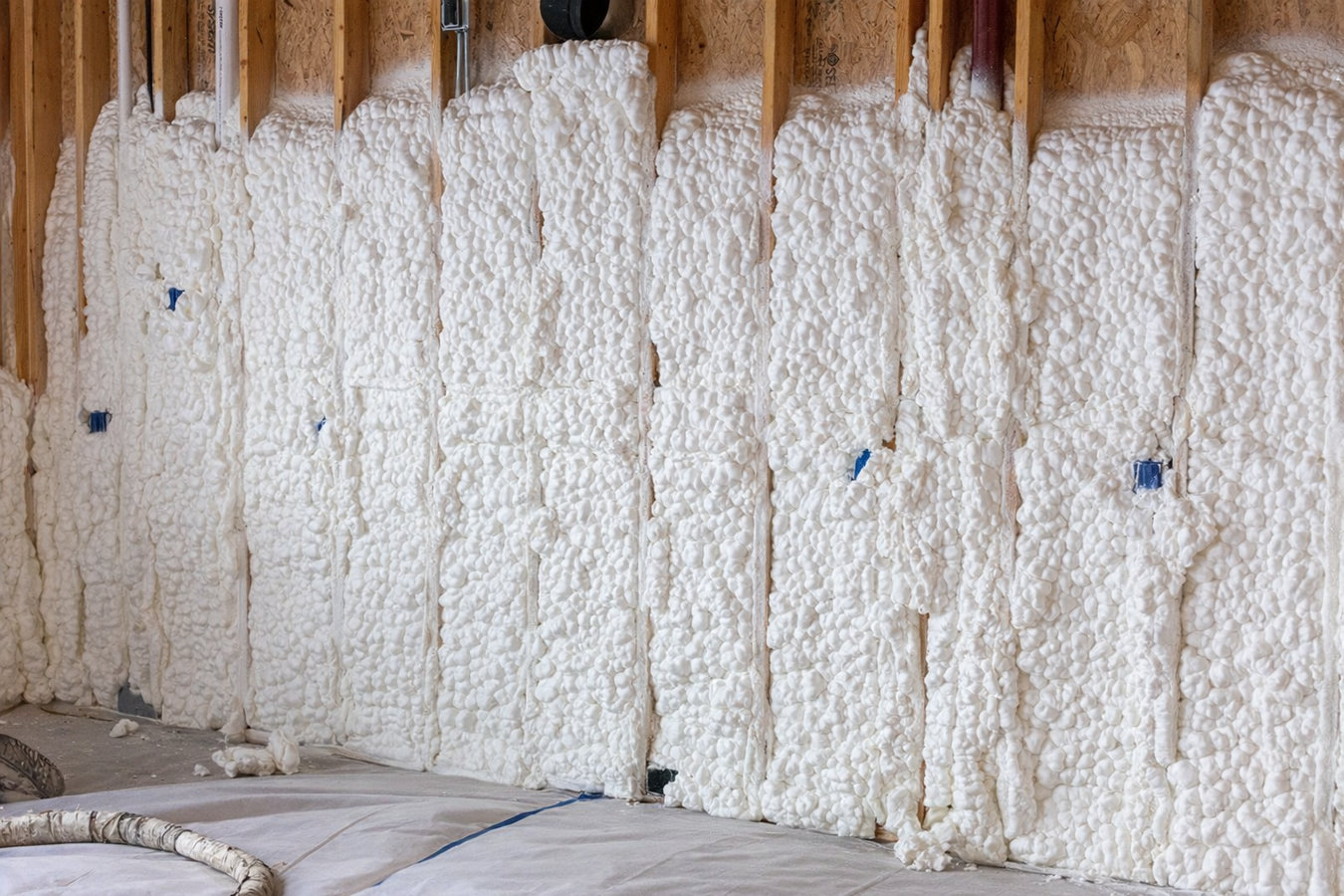
Cold air sneaks through rim joists and crawl spaces all winter while summer humidity works in from below. Closed-cell foam stops both in a single application that stays put for the life of your home.
Closed-cell foam insulation in Urbana, IL is a spray-applied material that expands on contact and hardens into a rigid, dense layer - insulating and air-sealing in a single step, with most crawl space and rim joist projects completed in one day.
Unlike fiberglass batts or blown-in material, closed-cell foam seals the surface it touches. It bonds to wood framing, concrete block, and poured concrete, filling irregular gaps that other materials cannot reach. Because the cells inside are sealed shut, water vapor cannot pass through it - which makes it the material of choice for crawl spaces, basement walls, and rim joists in Urbana's older housing stock. If your home needs both better insulation and a moisture barrier in the same spot, closed-cell foam handles both at once. For broader whole-home coverage, it often pairs well with open-cell foam insulation in interior spaces where moisture is less of a concern.
Homes built before the 1980s in Urbana frequently have rim joists and crawl space walls with no insulation at all. That single band of exposed framing at the top of your foundation wall can be responsible for a surprising share of your winter heat loss - and closed-cell foam is one of the fastest ways to close that gap permanently.
If your gas bill climbs sharply during Urbana's coldest months - even when you keep the thermostat at the same setting - air leakage through rim joists and crawl space walls is often the cause. Your furnace is working overtime to replace heat that is escaping through gaps in the foundation framing, and closed-cell foam is one of the most direct ways to stop it.
If the floors in your first-floor rooms feel cold underfoot in winter, or a room above an unheated crawl space is always chilly no matter how high you set the heat, the insulation beneath that space is inadequate or missing. In Urbana homes built before the 1970s, the rim joist area is often completely uninsulated - a single gap that accounts for a disproportionate amount of heat loss.
Go into your basement or crawl space on a cold day and look at the area where the floor framing meets the top of the foundation wall. If you can feel cold air moving, see daylight, or notice frost forming on the wood, you have a significant air leak in exactly the area where closed-cell foam performs best.
Urbana's humid summers mean that unprotected crawl spaces are vulnerable to moisture buildup, and a musty smell is one of the first signs that condensation or ground moisture is accumulating. Closed-cell foam applied to crawl space walls and rim joists creates a continuous barrier that stops this cycle before it leads to mold or wood rot.
We apply closed-cell spray foam in the spaces where air and moisture infiltration cause the most damage in Urbana homes: crawl spaces, rim joists, basement walls, and attic decks. The foam is mixed at the tip of the spray gun and expands to roughly 30 times its liquid volume within seconds of application, filling every gap and bonding permanently to the surface. Thickness is checked throughout the job - foam that is applied too thin will not perform as promised, and we do not rush application to save time.
For homes where the priority is whole-home air sealing alongside insulation, closed-cell foam in the foundation areas is often the first step, followed by spray foam insulation in the attic or walls depending on what the home needs. We assess the whole picture before recommending where each material goes, so you get a job that actually performs rather than one that only addresses part of the problem.
Best for Urbana homes where humidity, moisture, or musty odors signal that outside air and vapor are entering the crawl space unchecked.
Ideal for any home where the band of wood framing at the top of the foundation is exposed - the single most cost-effective spray foam application in older Urbana homes.
Suited for unfinished basements where foundation walls are concrete block or poured concrete with moisture exposure or visible air gaps.
Recommended for older Urbana attics with irregular framing where a continuous, rigid barrier performs better than batts or loose-fill.
Urbana's seasonal extremes - winters that drop well below zero and humid summers that push past 90 degrees - mean your home's insulation and air barrier are working hard in both directions all year. Older homes in Urbana's established neighborhoods, many of them built before modern energy codes existed, have rim joists and crawl space walls that were left completely open. Every hour of a cold Urbana night, conditioned air escapes through those gaps while cold outside air replaces it. Closed-cell foam is the most durable solution for those spaces because it insulates, seals, and resists moisture all at once - and it does not degrade over time the way fiberglass does. Homeowners in Champaign with similar housing stock face identical conditions and benefit from the same approach.
The summer side of the equation matters just as much. Champaign County's sustained humidity means that warm, moisture-laden outdoor air enters unprotected crawl spaces and condenses on cooler surfaces - a cycle that feeds mold and wood rot over time. Closed-cell foam stops that cycle by creating a continuous barrier that does not allow vapor to pass through. Homeowners in Rantoul and other communities in the area deal with the same clay-soil and humidity conditions. The Spray Polyurethane Foam Alliance publishes installation and safety standards that reputable contractors follow, and the U.S. EPA provides homeowner guidance on safe spray foam installation and re-entry times.
We reply within one business day. We ask about your home's age, which areas you want insulated, and whether you have had any moisture or comfort issues. Most quotes require an in-person visit because actual crawl space and basement conditions affect both the recommendation and the price.
A crew member inspects the crawl space, rim joists, or other areas you want addressed - checking for moisture damage, existing insulation, and any obstacles. This visit takes 30 to 60 minutes. You receive a written quote specifying the areas to be treated and the foam thickness to be applied.
If a permit is required by the City of Urbana's Building Safety Division, we handle it before scheduling the installation. Permit processing typically takes a few business days. We tell you exactly how to prepare - usually clearing access to the crawl space or basement before the crew arrives.
The crew arrives with equipment and applies the foam in sections, checking thickness throughout. Spray time for a typical crawl space or rim joist project runs two to four hours. We give you a specific re-entry time before we start - most homeowners return the same afternoon. If a permit was pulled, we coordinate the city inspection.
Free estimate, no obligation. We reply within one business day.
(217) 207-0899We measure foam thickness throughout application - not just at the end. Foam applied too thin will not perform as promised, and a thin spot near a framing edge or pipe penetration is where air and moisture find their way back in. Homeowners can check this themselves with a ruler after the job, and we encourage it.
We know which projects in Urbana require a permit through the Building Safety Division and we pull them on your behalf before any work begins. That permit means the installation gets an independent city inspection - which protects you when you sell your home and gives you a documented record of the work.
Spray foam applied over an already-wet or moldy surface locks in the problem. We inspect every crawl space and basement before recommending or scheduling any foam application, and we will flag moisture issues that need to be addressed first - even if that means a separate remediation step before we return.
We give every homeowner a specific re-entry time before spraying begins - not a vague estimate afterward. We account for household size, whether children or pets are present, and any known sensitivities. The U.S. EPA guidelines on spray foam re-entry times inform our standard practice, and we do not cut that window short.
Spray foam is one of the most durable insulation investments a homeowner can make - but only when it is applied correctly, at the right thickness, over the right surfaces. These standards are not extras we offer on request; they are how we do every job.
A softer, more affordable spray foam option well suited for interior walls and attic cavities where moisture resistance is less critical.
Learn MoreA broader look at where spray foam - both open and closed-cell - fits into a whole-home insulation and air-sealing strategy for Urbana homes.
Learn MoreBeat the first freeze - installation slots fill up fast once Champaign County temperatures start dropping in October.