
Loading...
Serving Urbana, IL and surrounding areas. (217) 207-0899
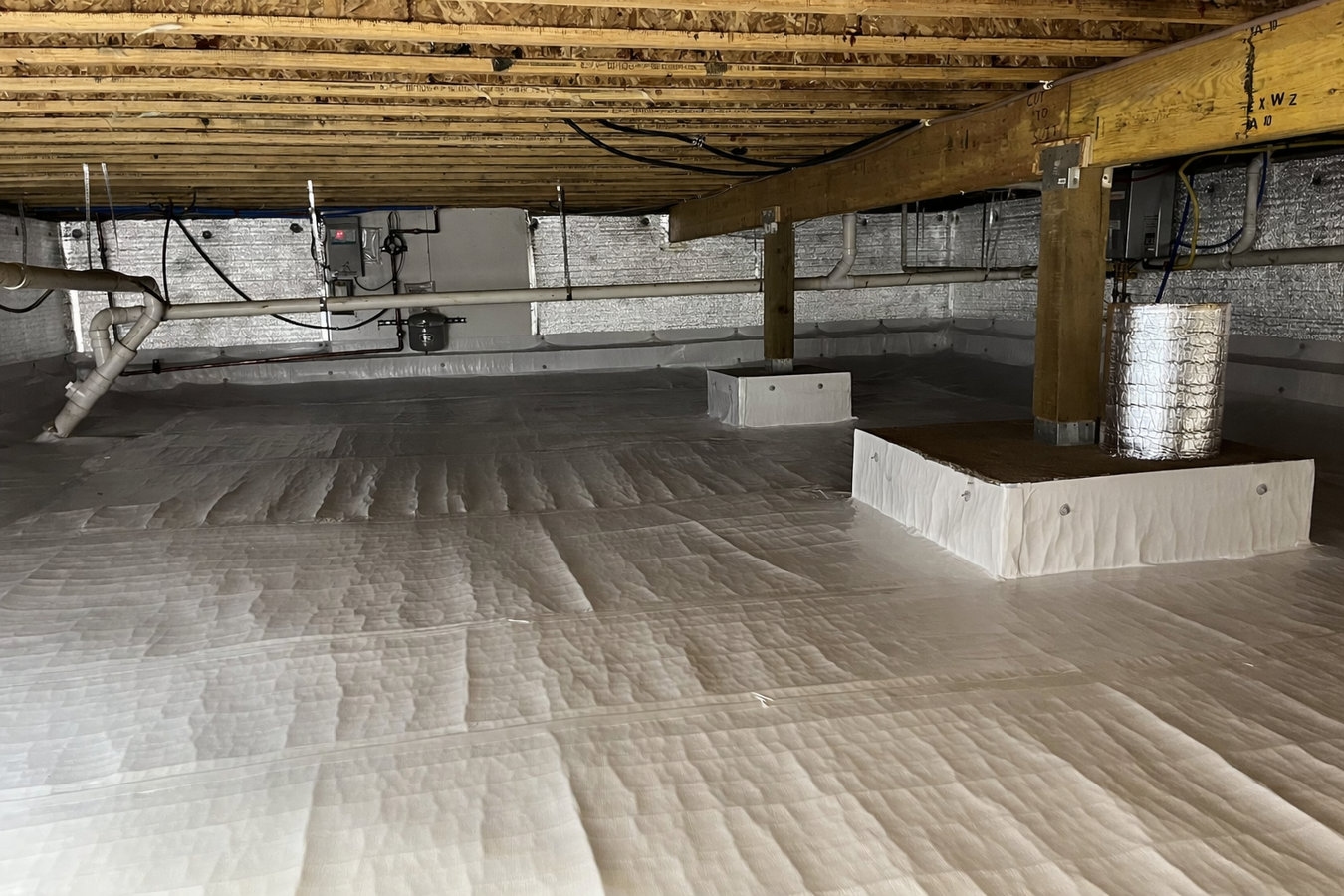
Ground moisture rises silently through unprotected crawl spaces, rotting floor joists and soaking insulation. A properly sealed vapor barrier stops it before it ever reaches your home.
Crawl space vapor barrier installation in Urbana, IL involves laying heavy-duty plastic sheeting across the crawl space floor, sealing all seams, and securing the edges along the foundation walls - most jobs are completed in one to two days and the crew works entirely below the living area, so your routine is not disrupted.
The barrier is a thick plastic sheet installed to stop ground moisture from rising into the structure above it. Without one, that moisture silently soaks into floor joists, saturates insulation, and eventually shows up as cold floors, musty smells, and higher energy bills. Many Urbana homes built before the 1970s were never constructed with any moisture protection under the crawl space, which means the wood framing may have been absorbing ground moisture for decades. Pairing a vapor barrier with proper crawl space insulation gives you both thermal protection and moisture control working together.
The quality of the installation matters as much as the material itself. Seams that are simply laid flat without taping, or sheeting that stops short of the foundation walls, leave gaps where moisture sneaks back in. We install barriers with overlapped, taped seams and run the material up the walls so there are no exposed sections of ground anywhere in the space.
A damp, earthy odor that gets stronger every March and April is one of the clearest signs of ground moisture rising through an unprotected crawl space. In Urbana, the clay-heavy soil stays saturated for weeks after snowmelt, and without a barrier that moisture has nowhere to go but up into your home. The smell is not just unpleasant - it means moisture is already moving through the structure.
Floors that feel noticeably cold in winter, or that have any give or softness when you walk on them, can mean the wood underneath has been absorbing moisture over time. Urbana's cold winters make moisture-damaged wood lose its stiffness faster, and you feel it underfoot before you ever see visible damage. Both symptoms are worth investigating before they turn into structural repairs.
If you open the access hatch and see exposed soil - or a thin, crinkled sheet of plastic that is clearly deteriorated - your crawl space has no effective moisture protection. You do not need to go inside to check; a flashlight from the opening is usually enough. Exposed dirt under a home in Urbana's climate means constant moisture is moving upward into the structure every day.
Water droplets on pipes or dark staining on the wooden beams visible from the access hatch mean moisture levels are already high enough to cause damage. Mold on wood framing is a serious sign - it means the moisture problem has been going on long enough for biological growth to take hold. Addressing the moisture source is the first step before any other repairs.
We install heavy-duty vapor barriers rated at 10 mils or thicker - not the thin plastic sold at hardware stores that tears after a season or two. Every installation includes overlapped seams sealed with tape, coverage that runs up the foundation walls, and individually wrapped penetrations where pipes or posts pass through. This is the difference between a barrier that holds up through Urbana's wet springs for 20 years and one that needs replacing in five. We also handle the prep work that often gets skipped: clearing debris, documenting what we find with photos, and flagging any mold or damaged framing that needs attention before the barrier goes in.
For homes where the crawl space needs more than a moisture barrier, we can pair the installation with full crawl space insulation to address both heat loss and moisture at the same time. If your home has broader air sealing needs, we can also assess whether a vapor barrier installation in other parts of the home - basement walls or floor - would round out the protection. We will walk you through the right combination after the assessment, with no pressure to add anything you do not actually need.
Suited for crawl spaces that are dry and accessible, where the primary goal is blocking ground moisture with a properly sealed plastic barrier.
For crawl spaces that need cleaning before a new barrier can go in - common in Urbana homes that have never had moisture protection installed.
For homes where an old, torn, or inadequate barrier is already in place and needs to be removed and replaced with durable material.
The most complete option - pairs the ground barrier with sealed foundation walls and vent management for homes with serious or recurring moisture problems.
Champaign County sits on dense glacial clay soils that drain slowly and stay saturated for extended periods after rain or snowmelt. That means the ground under a crawl space in Urbana is releasing moisture upward for weeks after a storm - not just during it. Combine that with the freeze-thaw cycle central Illinois experiences from November through March, and the ground underneath your home faces constant moisture pressure that sandier soils in other parts of the country simply do not. Homeowners in Champaign deal with the same clay soil conditions and benefit from the same approach. The U.S. Department of Energy identifies ground moisture control as one of the highest-priority improvements for homes with crawl spaces in humid climates.
Urbana also has a significant share of homes built between the 1920s and 1960s, many of which were constructed with vented crawl spaces and no moisture protection at all. If your home is more than 40 years old and has never had a vapor barrier installed, the wood framing and insulation beneath your floors have likely been absorbing ground moisture for decades. That is one of the most common situations we encounter working in Urbana's established neighborhoods. Homeowners in Savoy and surrounding communities with similar postwar housing stock face the same deferred maintenance issue, and a vapor barrier is one of the most direct ways to stop inheriting it.
When you reach out, we ask a few basic questions about your home and any symptoms you have noticed. We reply within one business day and can usually schedule an on-site estimate within a few days. The visit is free and comes with no obligation to move forward.
We access your crawl space through the hatch and check the condition of any existing barrier, look for moisture damage or mold, and measure the space. This typically takes 30 to 60 minutes and you do not need to go in yourself. We document what we find and explain it clearly before giving you a written estimate.
The crew clears any debris from the crawl space floor, rolls out heavy plastic sheeting, overlaps and tapes the seams, and secures the material along the foundation walls. The work happens entirely below your living area. Most Urbana crawl spaces take one full day - occasionally two if the space is large or access is tight.
When the work is done, we walk you through what was installed, show you photos of the finished job, and explain what to watch for going forward. Within a few weeks, most homeowners notice the musty smell fading and floors feeling warmer - those are the signs the barrier is working.
Free estimate, written quote, no pressure - we assess your crawl space and explain exactly what we find.
(217) 207-0899We install barriers rated at 10 mils or thicker and tape every seam - not just lay the sheets flat and hope they hold. This matters in Urbana's climate, where ground moisture pressure is high for most of the year. A barrier that tears or gaps at the seams fails quickly and leaves your framing exposed.
The homes we work in most often are the pre-1970 properties in Urbana's established neighborhoods, where crawl spaces have gone unaddressed for decades. We know what to expect when we open the hatch on a 1950s home near the University of Illinois campus - and we document what we find so there are no surprises on the bill.
A vapor barrier is invisible once installed, which makes it easy for contractors to cut corners. We photograph the finished job - seams, wall coverage, and penetrations - so you have a clear record of what was done and how it was done. You should never have to take a contractor's word alone.
Urbana's Building Safety Division has its own requirements that differ from general Illinois rules, particularly for projects that involve encapsulation or vent sealing. We know which projects require a permit in Urbana and handle the paperwork when needed. The{' '}ICAA (Insulation Contractors Association of America) sets the installation standards we follow on every job.
Every one of these details adds up to a job that holds up through Urbana winters and humid summers - not just one that looks fine on the day we leave. Call us or request an estimate online and we will give you a straight assessment of what your crawl space actually needs.
Moisture barriers for basements, basement walls, and other areas beyond the crawl space floor.
Learn MoreThermal insulation for crawl space floors and walls, often installed alongside a vapor barrier for complete protection.
Learn MoreSpring snowmelt is the hardest season on unprotected crawl spaces in central Illinois - call us now to schedule your free estimate before the schedule fills up.