Loading...
Serving Urbana, IL and surrounding areas. (217) 207-0899
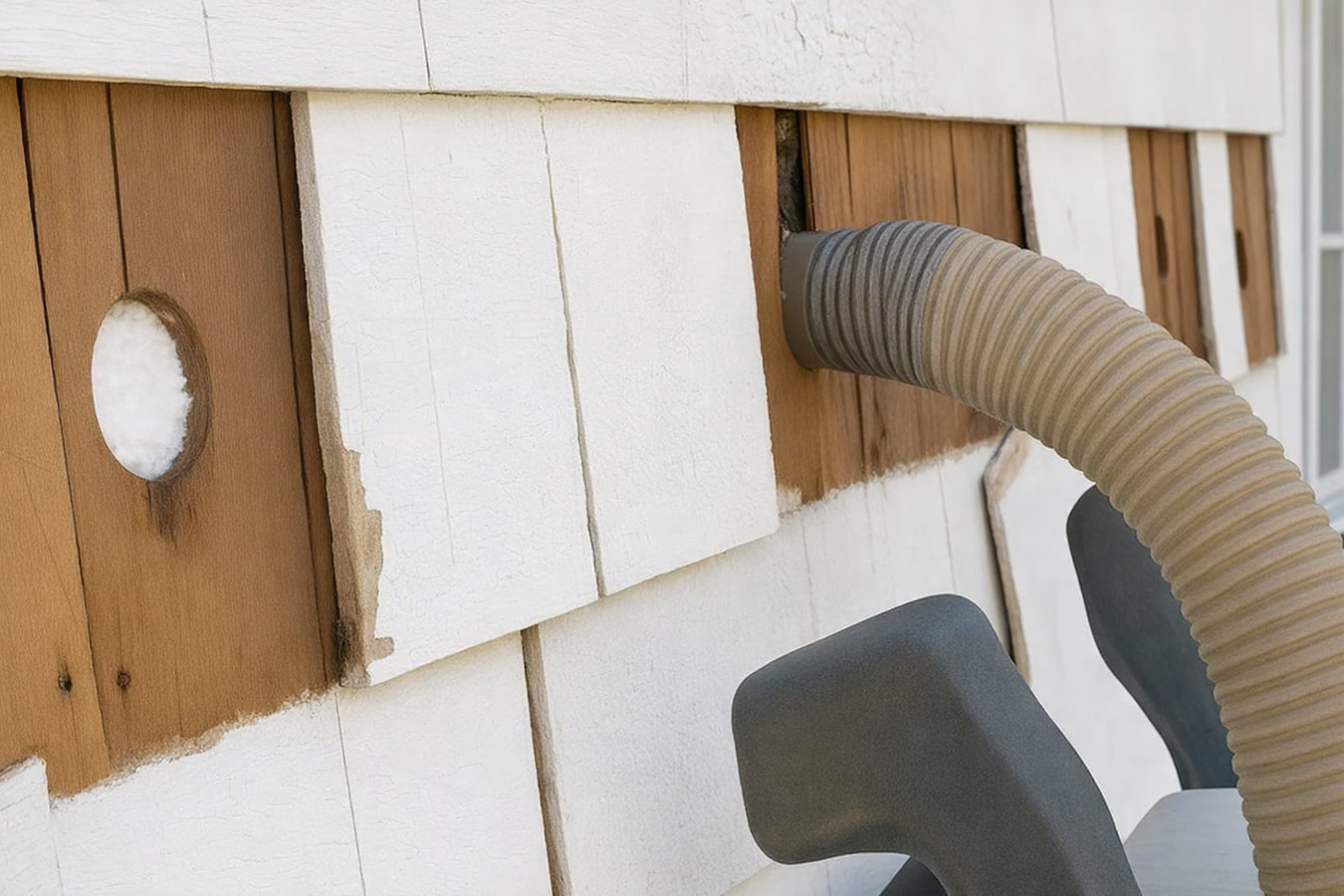
Most Urbana homes were built before modern insulation standards. Retrofit installation adds what was never there - no demolition, no major disruption, and results you will feel immediately.
Retrofit insulation in Urbana, IL means adding insulation to a home that is already built - without tearing out walls or doing a major renovation - by blowing or injecting material into existing attic floors, wall cavities, and crawl spaces through small access points, and most attic jobs are completed in a single day.
If your home was built before 1980, it was almost certainly constructed with insulation levels that fall well short of what is recommended for central Illinois today. In Urbana, where a large share of the housing stock dates to the 1920s through 1970s, this is not an unusual situation - it is the norm. The good news is that you do not need to renovate to fix it. Blown-in fiberglass and cellulose can fill wall cavities and attic floors around existing framing, wiring, and pipes without disturbing your ceilings or walls. Pairing retrofit work with proper home insulation planning gives you a clear picture of every area in your home that needs attention.
The result is a home that holds heat in winter, stays cooler in summer, and costs less to run month to month. Most homeowners notice the change in comfort quickly - and see the difference on their Ameren Illinois bill within the first full heating season after the work is done.
If your gas or electric bill climbs dramatically during Urbana's coldest months, that is a strong sign your home is not holding heat the way it should. A well-insulated home maintains temperature more steadily, so your furnace does not have to run as hard or as often. If your bills feel out of proportion to the size of your home, insulation is one of the first things worth checking.
If you have a bedroom that is freezing in January or a living room that never cools down in July no matter what the thermostat says, uneven insulation is a likely cause. This is especially common in Urbana's older homes, where insulation was added piecemeal over the years or was never installed in certain wall cavities at all. The problem is usually not your HVAC system - it is that conditioned air is escaping before it can do its job.
Hold your hand near an electrical outlet or light switch on an exterior wall on a cold day - if you feel cool air coming through, that is a sign of air leaks and missing insulation behind the wall. This simple test any homeowner can do is a reliable indicator of what is happening in the wall cavity. Drafts like this are common in Urbana's older bungalows and two-story homes.
A large portion of Urbana's housing stock dates to the mid-20th century, and homes built before 1980 were constructed under very different energy standards than what is recommended today. If you have never had insulation added or assessed since you moved in, there is a good chance your attic and walls are significantly under-insulated. This is one of the most common situations retrofit contractors encounter in this area.
Retrofit insulation is not a single product - it is a set of techniques matched to the specific area of your home that needs attention. For attic floors, we blow loose-fill fiberglass or cellulose evenly across the entire surface to the depth recommended for central Illinois, covering joists completely and addressing any gaps around penetrations first. For walls, we drill small holes from the exterior, fill each cavity using dense-pack methods that prevent settling, and patch and paint the access points so the finished wall looks as it did before. For crawl spaces, we can combine insulation with a vapor barrier or full encapsulation depending on the condition of the space. We also offer complete spray foam insulation where the situation calls for an air-sealing and insulating material in one step.
Many retrofit projects benefit from air sealing work done first - insulation slows heat transfer, but it does not stop air movement through gaps. If your attic assessment reveals significant air bypasses, we can combine sealing and insulation into a single visit. Homeowners interested in broader improvements can also explore our home insulation services for a whole-home plan that addresses attic, walls, and floors together. We assess your home first and recommend only what it actually needs - no upselling.
Loose-fill fiberglass or cellulose blown to the recommended depth for central Illinois - the most common retrofit project and the fastest payback for most Urbana homeowners.
Material injected into existing wall cavities through small drilled holes, then patched - suited for older homes where walls were never insulated or where insulation has settled.
Insulation added between floor joists or along crawl space walls, often combined with a vapor barrier - ideal for homes with cold floors or high energy loss below the living area.
A full review of attic, walls, and crawl space in a single visit, with a prioritized plan and written estimate - the best starting point when you are not sure where to begin.
Urbana sits in a climate zone where winter temperatures regularly drop below zero and summer humidity makes a poorly insulated home feel like a sauna. That means your heating and cooling systems are working hard for much of the year, and under-insulated homes pay the price in high utility bills every month. The U.S. Department of Energy recommends attic R-values between R-49 and R-60 for central Illinois homes - levels that most older Urbana homes do not currently meet. Retrofit insulation here is not a luxury upgrade; it is one of the most practical investments available for the city's housing stock. The Building Performance Institute sets the standards our team follows when assessing and installing insulation, so the work is done to a recognized benchmark - not guesswork.
A significant share of Urbana's residential neighborhoods - including areas near the University of Illinois campus and older blocks throughout the city - were built between the 1920s and 1970s, when insulation standards were a fraction of what they are today. Homeowners in these areas often see the biggest improvements after retrofit work because there is so much room to gain. Homeowners in nearby Mahomet and Rantoul with similarly aged homes face the same challenge. Ameren Illinois also offers rebates for qualifying insulation improvements, which can meaningfully reduce what you pay out of pocket - ask us about eligibility before you sign anything.
We ask about your home's age, the areas you are concerned about, and what is prompting the call. No pressure - it is a five-minute conversation. We reply to all requests within one business day.
A contractor visits your home, checks existing insulation levels, looks for air leaks, and reviews any moisture concerns that should be addressed before new material goes in. You get a written estimate before any work is scheduled - 30 to 60 minutes for the visit.
The crew sets up blowing equipment outside and runs the hose to the work area. Attic jobs are typically done the same day. Wall insulation holes are drilled, filled, and patched. Your home is usable throughout - most of the noise and activity stays outside or in the attic.
We walk you through the finished work, confirm depth and coverage, and provide written documentation of the materials and installation. That paperwork is what you need for Ameren rebate applications and the federal tax credit - we make sure you have it.
Free estimate. No obligation. We tell you exactly what your home needs and what it costs before any work begins - including which rebates you qualify for.
(217) 207-0899We have worked in hundreds of central Illinois homes built between the 1920s and 1970s. We know the wall cavity sizes, framing styles, and access challenges that come with that era of construction - and we know where insulation is typically missing or inadequate before we even go into the attic.
We participate in Ameren Illinois energy efficiency programs. That means we can identify which rebates apply to your project, install the work in a way that qualifies, and provide the documentation you need to collect the money. You do not have to figure it out alone.
Every retrofit insulation job ends with written records of the material used, the areas covered, and the depth or thickness achieved. That documentation matters for rebate applications, federal tax credits, and home sales. We provide it as a standard part of every project - not on request.
Adding insulation over a leaky attic floor is like putting a blanket over a screen door. Before we blow in material, we check for air bypasses around pipes, wires, and fixtures. Where significant leaks exist, we seal them first - so the insulation works as it should from day one.
Retrofit insulation is one of those investments that pays back in ways you feel every day - a warmer bedroom in January, a lower bill in February, a house that finally holds its temperature. We do the work right so it stays right for years.
A two-in-one solution that insulates and air-seals in a single application - often used in attics, crawl spaces, and rim joists where both functions are needed.
Learn MoreA full-home approach covering every area where heat and cooling are being lost - the natural next step for homeowners ready to address the whole picture at once.
Learn MoreSpots fill up before heating season - get your estimate now and start saving on your first winter energy bill.